University of Applied Sciences Emden/Leer and Partners Launch Project HyperBRIDGE
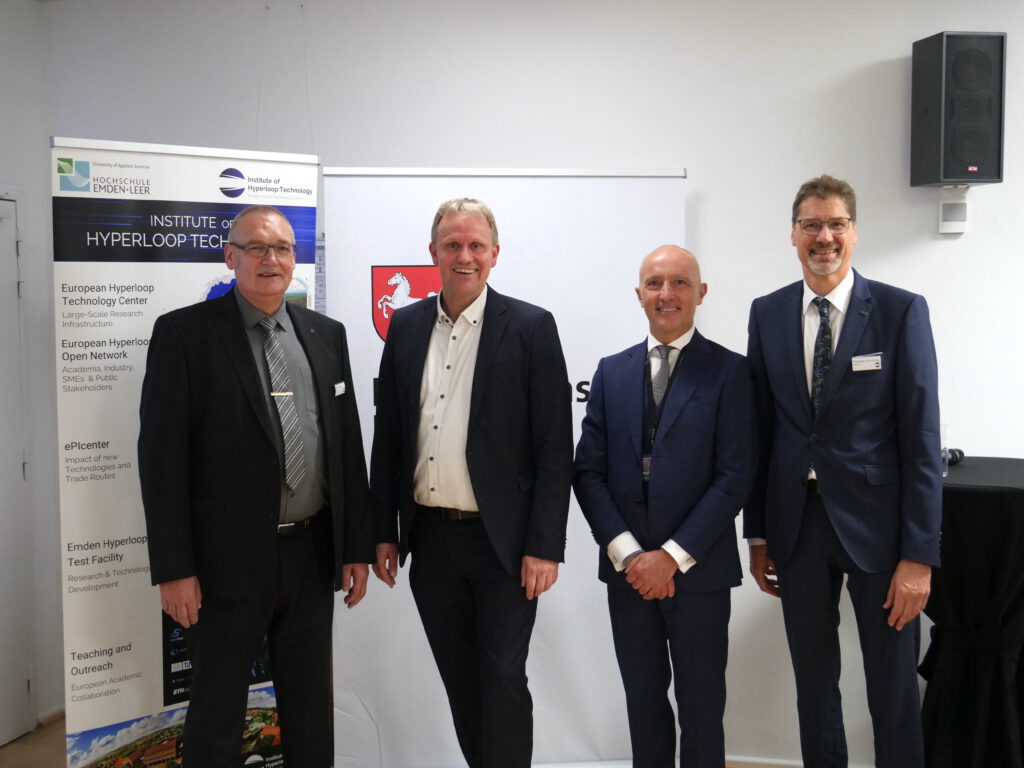
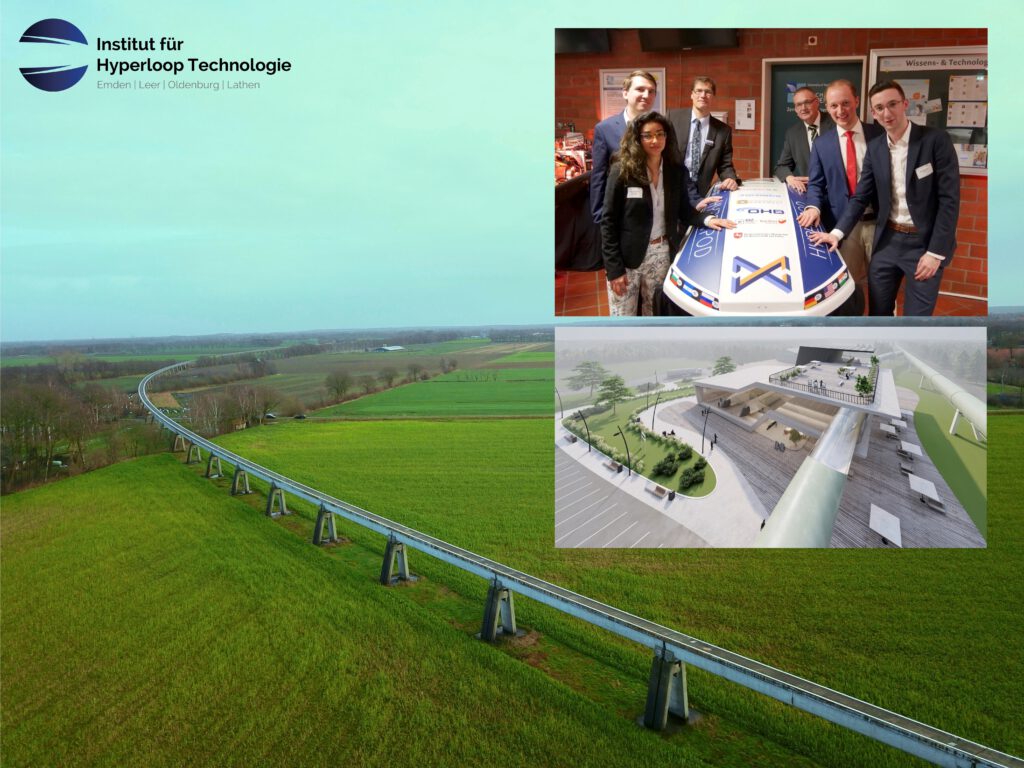
Veendam/Emden – With the goal of advancing the innovative hyperloop technology and engaging local businesses and residents, the University of Applied Sciences Emden/Leer has launched the cross-border project HyperBRIDGE in collaboration with other partners from Germany and the Netherlands. Following an initial meeting in October, the participants have begun their work to set a milestone in the development and public awareness of the technology.
HyperBRIDGE is supported by Interreg VI A Germany-Netherlands. The consortium includes small and medium-sized enterprises, as well as the University of Applied Sciences Emden/Leer, the Rijksuniversiteit, and the Hanzehogeschool Groningen. The initiative is coordinated by the European Hyperloop Center. The cross-border initiative with a volume of $5.7 million brings together companies, universities, and research institutions to position the region as a European leader in the development of hyperloop technologies. Plans include connecting around 20 companies through joint research, testing, and training programs with key knowledge institutions, as well as holding information events in schools.
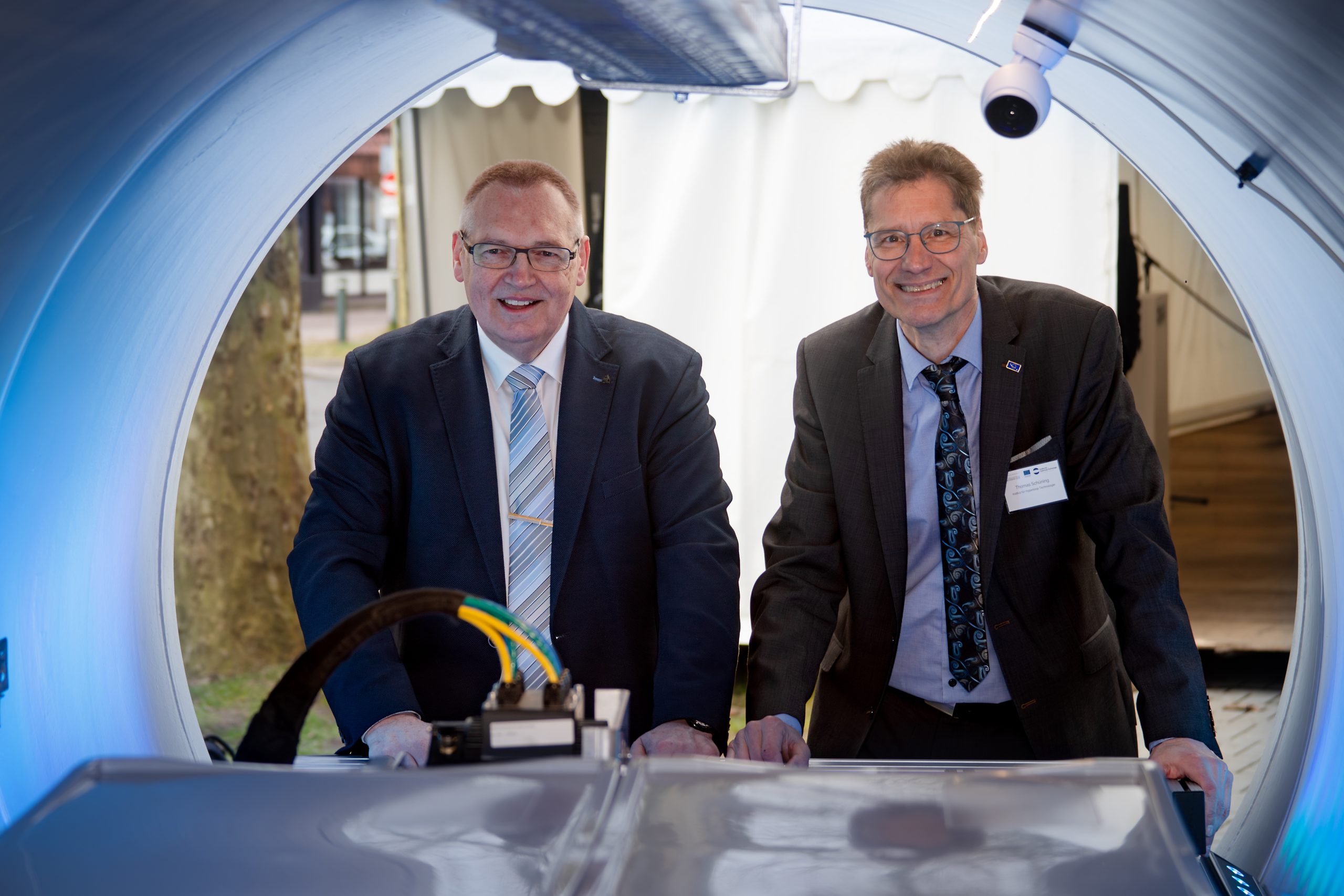
“The question is not only whether it can work, but also whether society wants it,” said Prof. Dr. Walter Neu, who coordinates the hyperloop activities together with Prof. Dr. Thomas Schüning at the Emden Institute for Hyperloop Technology.
The project builds on the resources of the European Hyperloop Center (EHC) in Veendam and the goTube test facility at the University of Applied Sciences Emden/Leer – two of the most advanced hyperloop research sites in Europe. The focus is on developing effective, market-oriented technologies and systems that go beyond hyperloop applications and are also of interest to industries such as logistics, automotive, energy, and infrastructure. Hyperloop is a new form of emissions-free high-speed transportation that uses magnetic levitation and electric propulsion in low-pressure tubes to transport passengers and goods faster and more efficiently than existing systems. While commercial introduction is expected after 2030, the technology is rapidly advancing. The project consortium aims to accelerate this development.
The project targets four key innovation areas:
Structural condition monitoring for infrastructure, enabling real-time detection of loads and damage;
Communication standards between pods, crucial for the safety and coordination of hyperloop vehicles;
Hyperloop operation systems, integrating control, simulation, and digital twin functions;
Immersive digital twins, used for training, maintenance, and business model development.
HyperBRIDGE is turning this promise into tangible progress – and promoting sustainable growth, regional competitiveness, and the emergence of a leading European innovation center for hyperloop.
The high-resolution images can be found in the press kit section of the website.
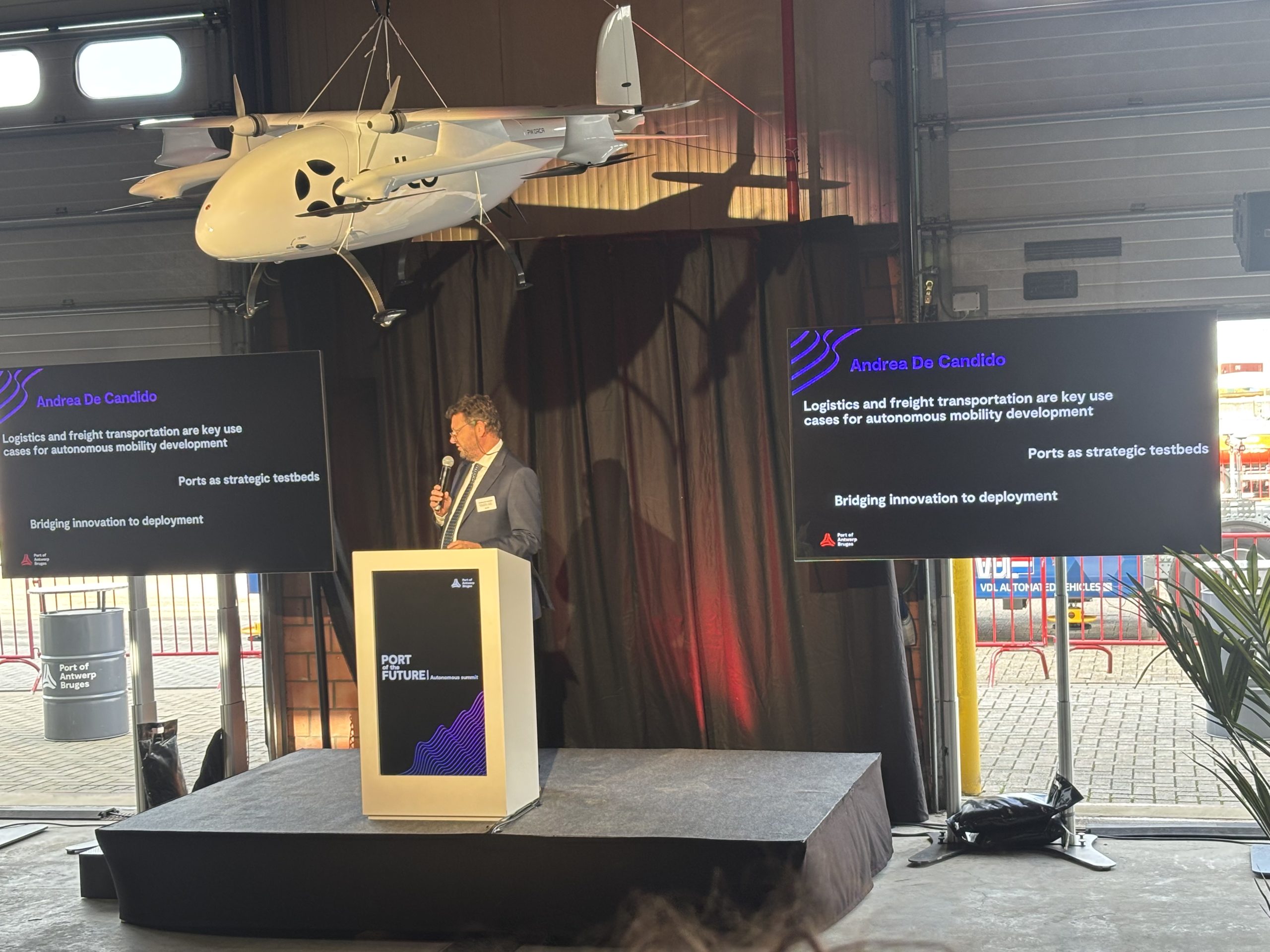
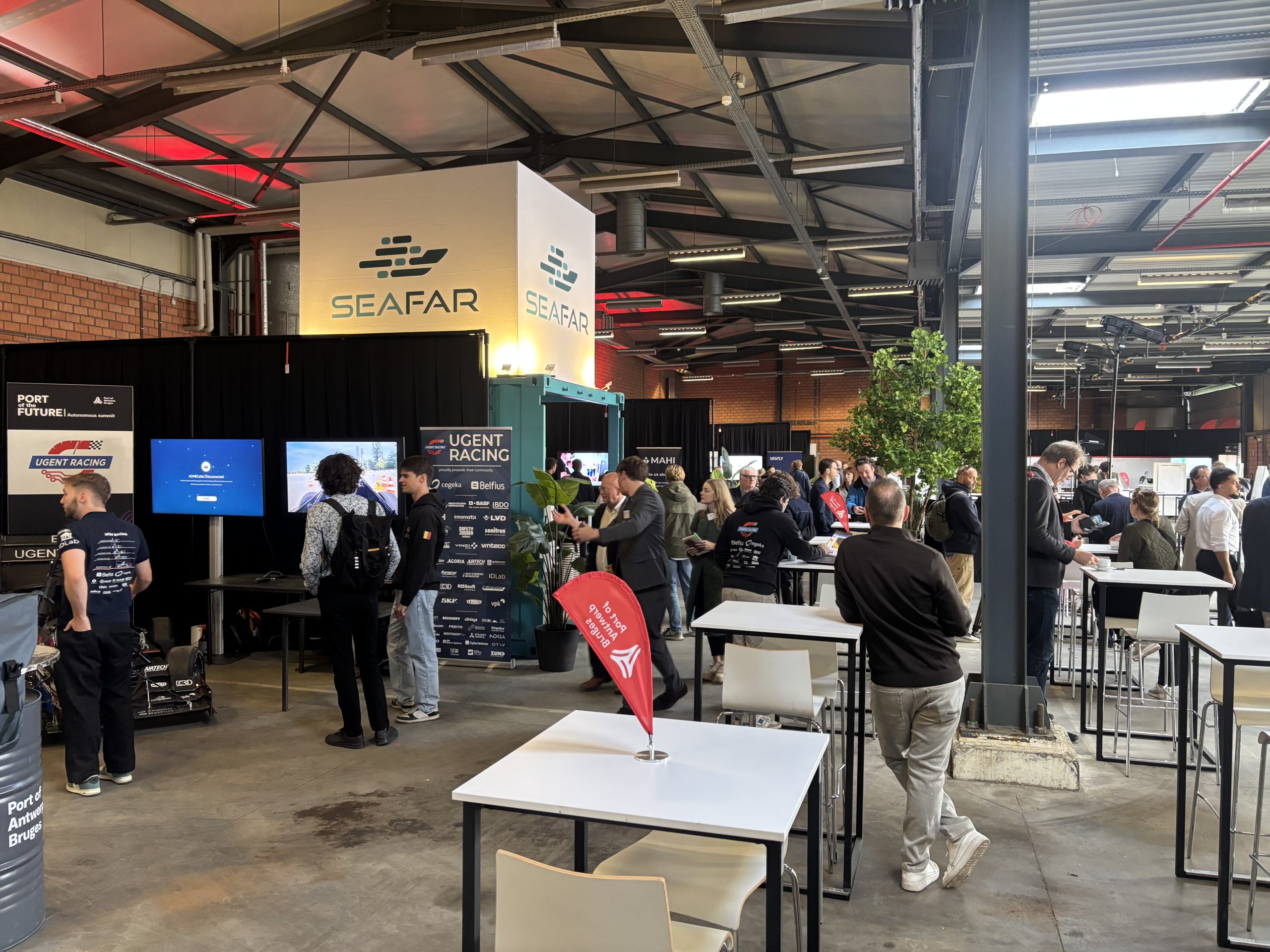
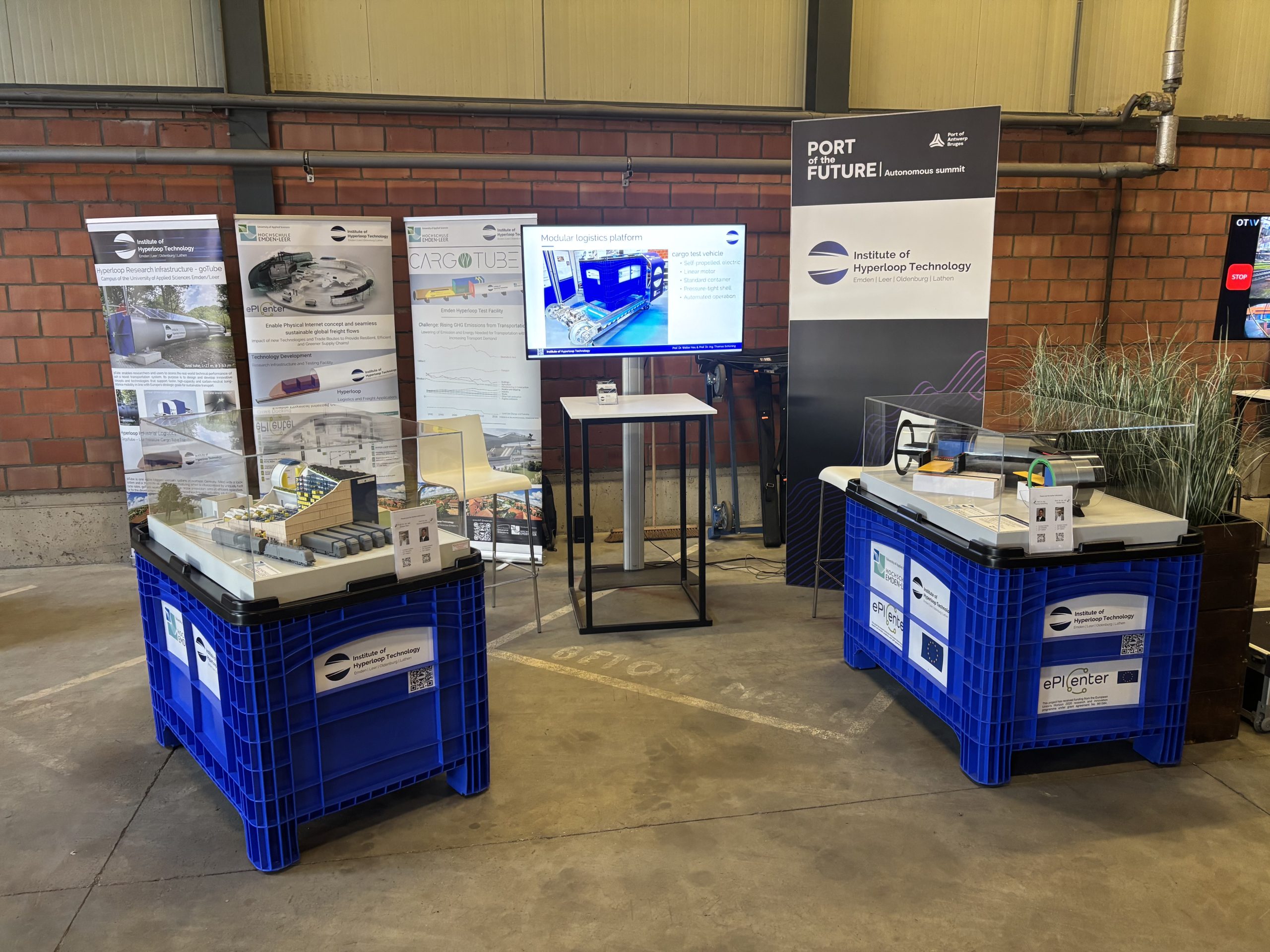
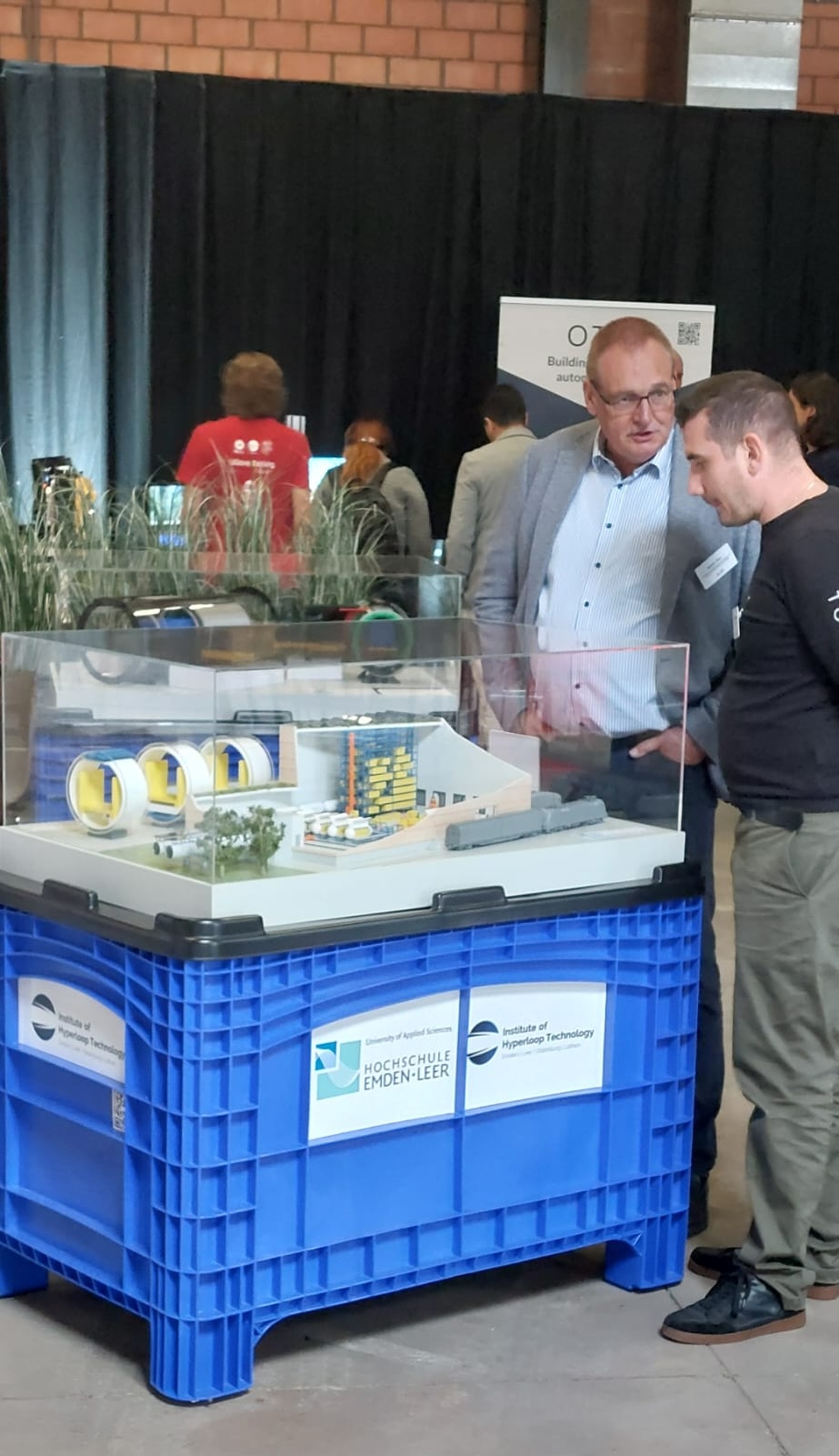
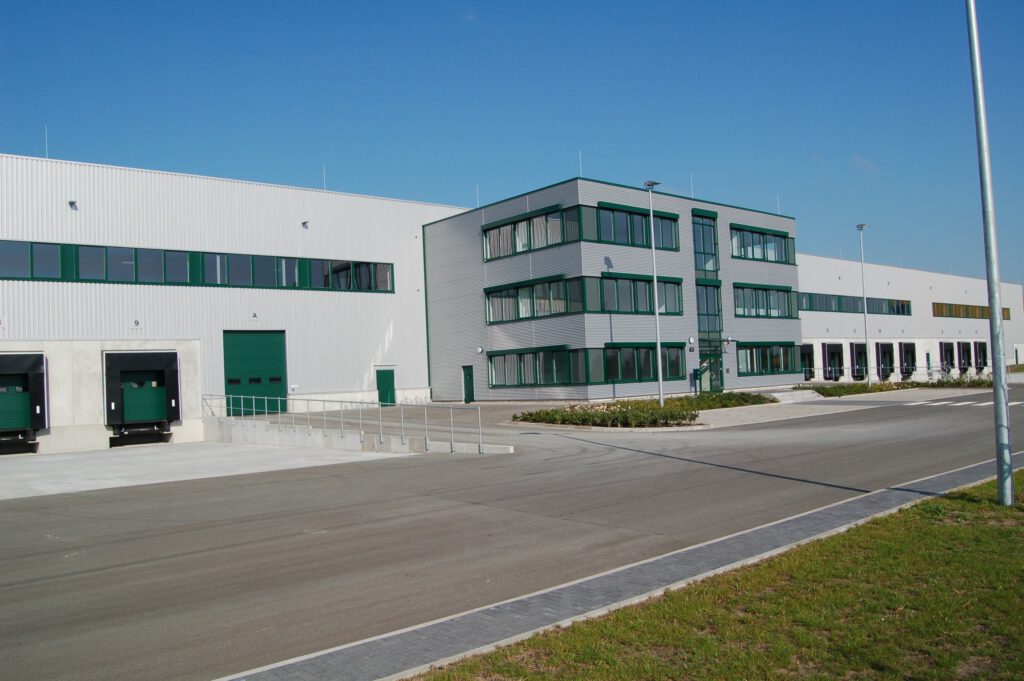
Antwerp-Bruges, Belgium – The Institute of Hyperloop Technology recently participated in the Autonomous Summit at the Port of Antwerp-Bruges, a premier event showcasing the latest advancements in autonomous technology. The institute presented its Logistic Service Park and Airdock models, designed to improve the efficiency and sustainability of global supply chains. Professors Walter Neu and Thomas Schüning, leading experts in the field, provided insights into the potential of these innovative solutions. The presentation explored how hyperloop technology can be applied to transform the transportation industry, making it faster, more efficient, and environmentally friendly. The Port of Antwerp-Bruges provides a unique environment for testing and developing autonomous technologies, with its commitment to innovation and its reputation as a hub for trade and commerce. The Institute of Hyperloop Technology collaborated with the port already within the ePIcenter project to explore the potential of autonomy and innovation in reshaping global supply chains. The Autonomous Summit took place on September 16th, 2025 at the Port of Antwerp-Bruges. The event brought together industry leaders, policymakers, and experts to discuss the latest advancements in autonomous technology and its applications in the transportation industry. More information on the ePIcenter project are available on the projects page.
The high-resolution images can be found in the press kit section of the website.
Science Ministry Launches Hyperloop Test Facility in Emden
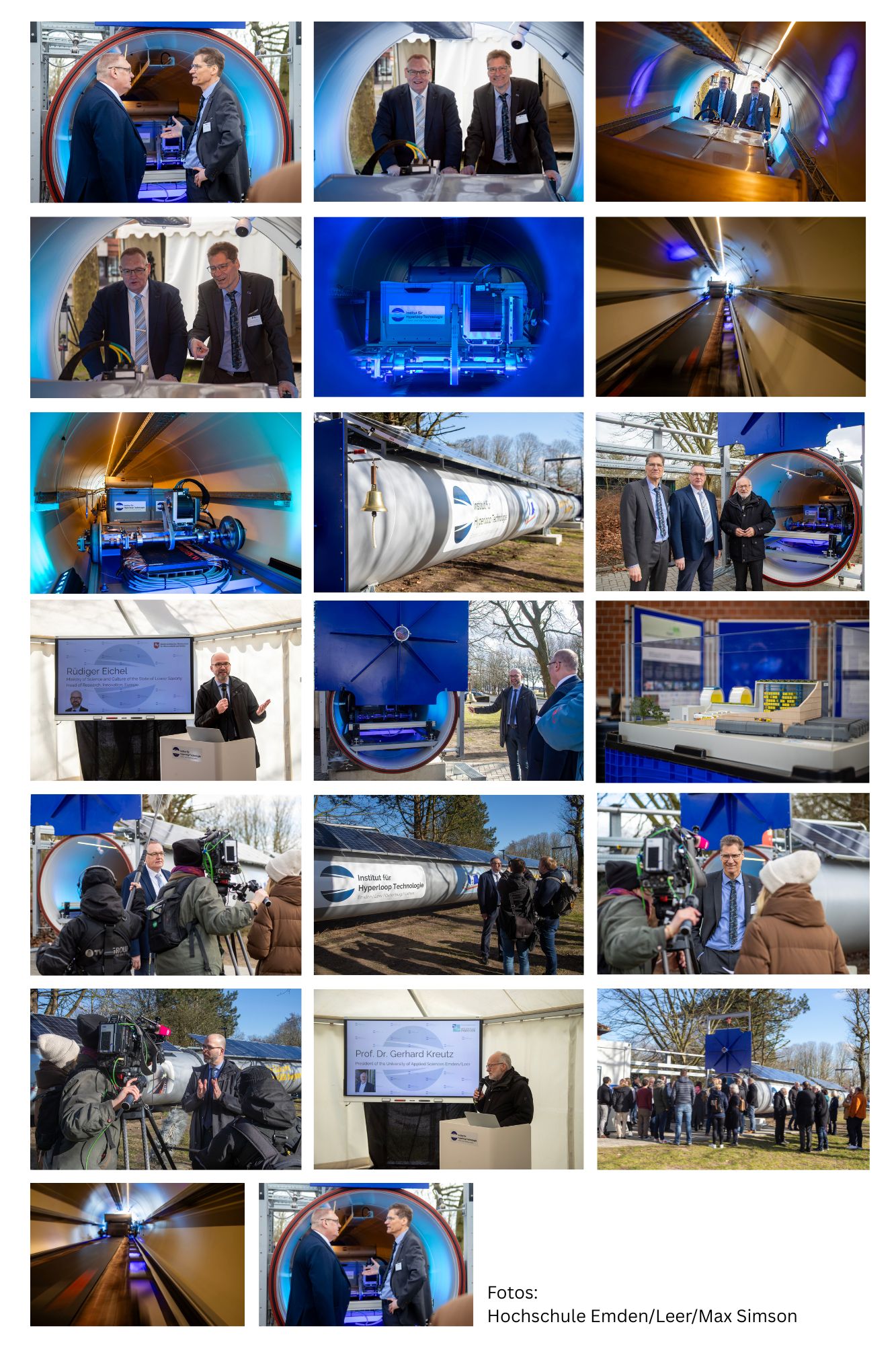
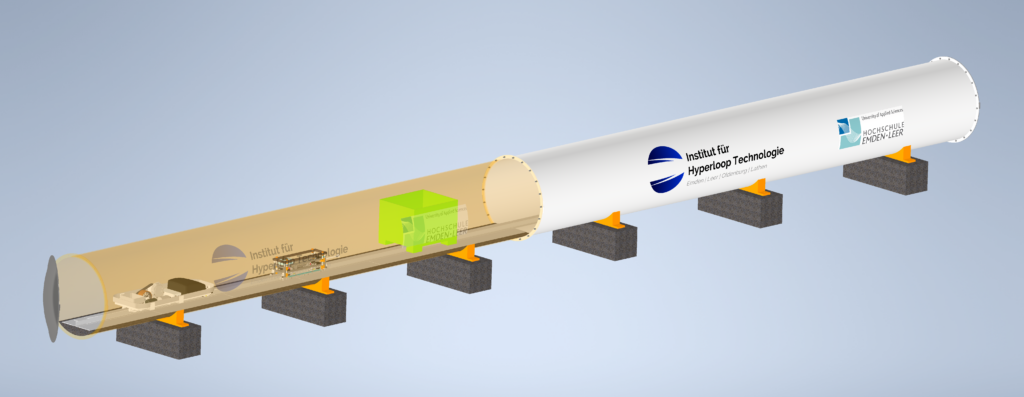
The goTube steel test infrastructure on the Campus Emden is the longest hyperloop facility in Germany, measuring 27 meters. For Lower Saxony’s Minister of Science and Culture Falko Mohrs, these are “possibly the most important meters on the way to a high-speed transportation system of the future.” On Friday, the new research infrastructure at the University of Applied Sciences Emden/Leer was officially opened with over 100 guests in attendance.
In the minister’s absence, Rüdiger Eichel, head of the department for research, innovation and Europe at the Ministry of Science and Culture, conveyed congratulations and words of appreciation. Representatives from the State of Lower Saxony and EU politics, industry and science also attended, including partners from the EU project Hyper4Rail.
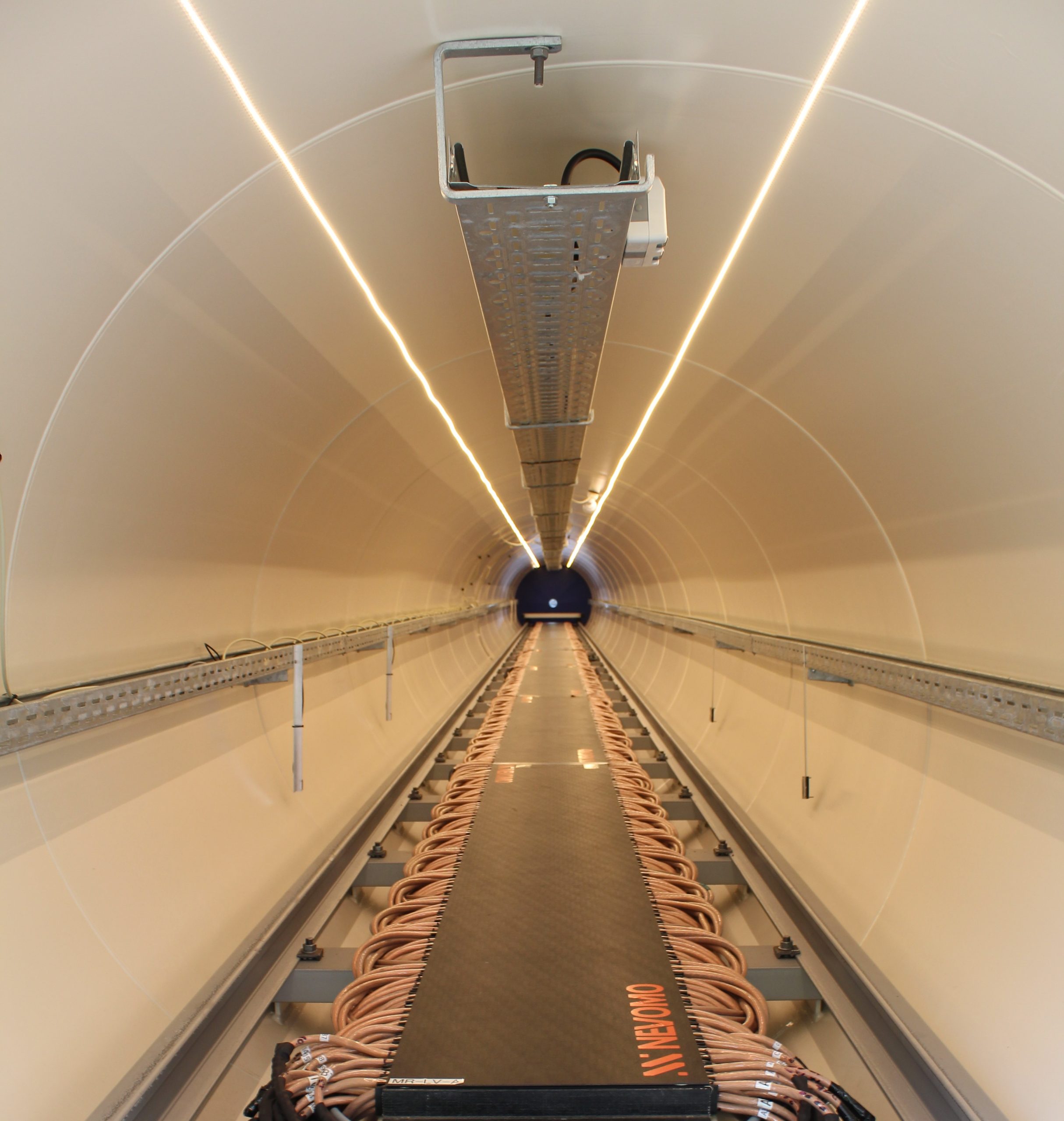
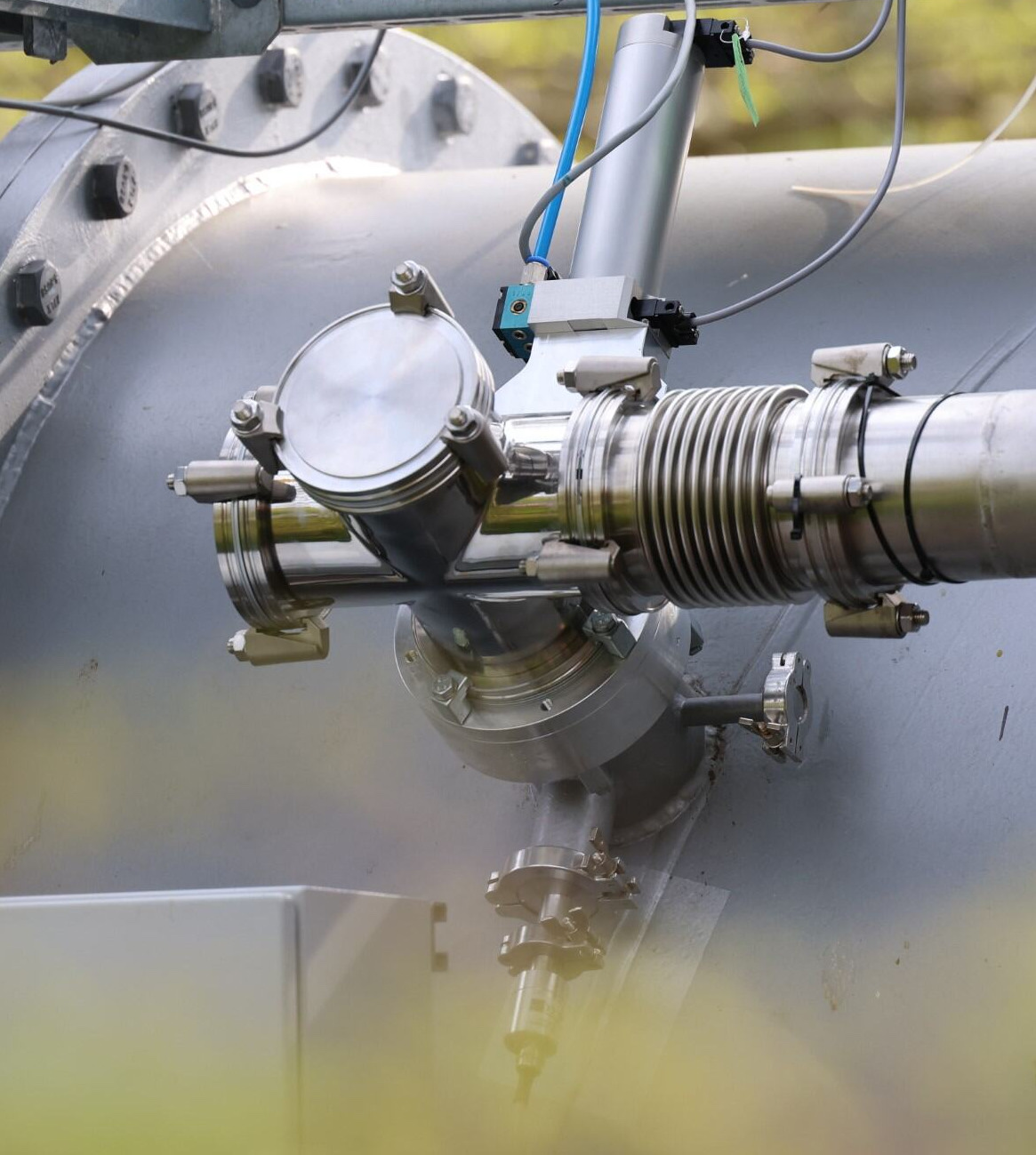
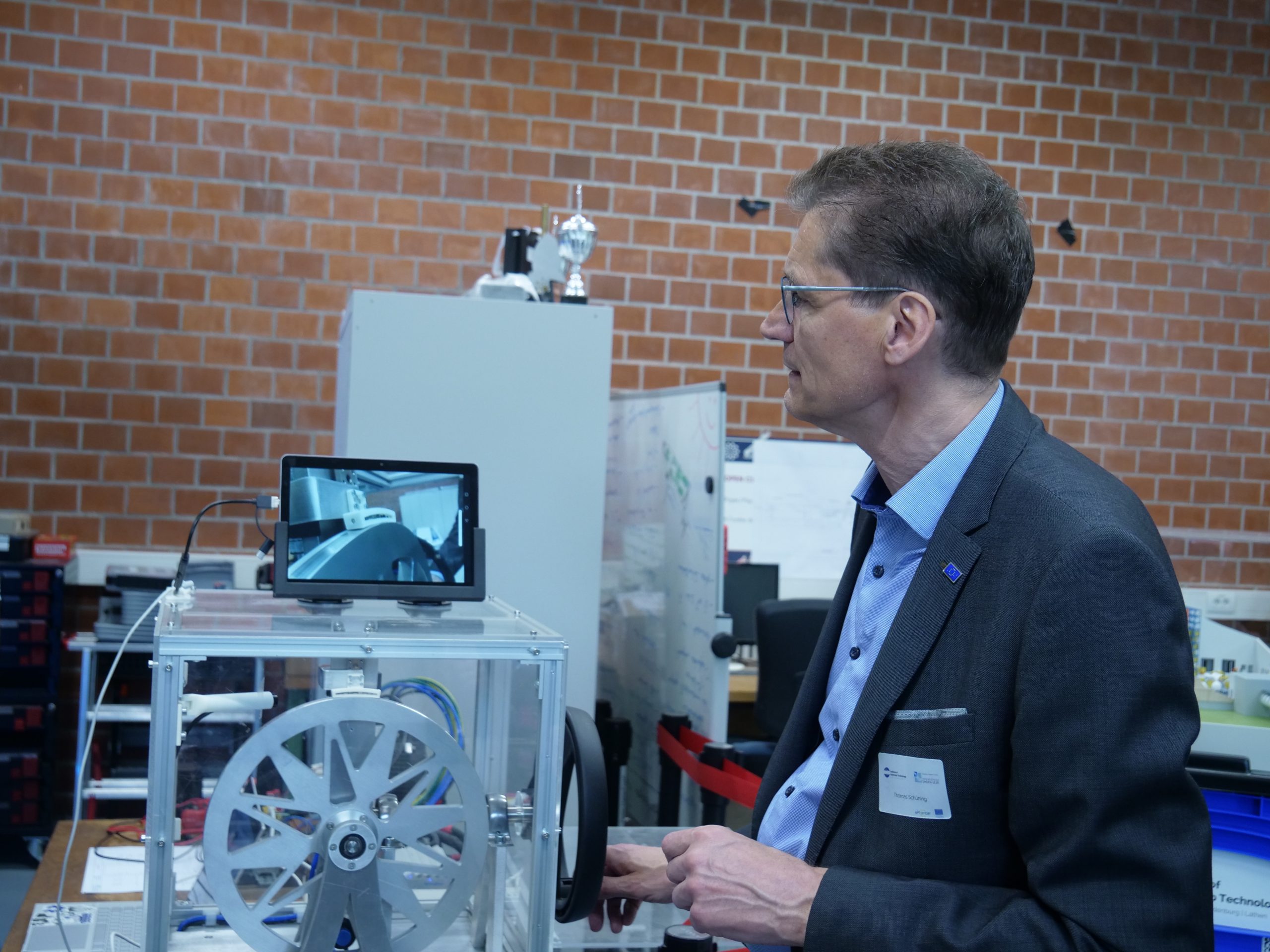
The goTube facility features a 1.6-meter diameter steel tube, where researchers will investigate various aspects of hyperloop technology, including propulsion and control systems, vacuum technology, thermal behavior, material properties, and logistics and operation concepts.
“This experience will be incorporated into the new EU Hyper4Rail project, in which the university plays a key role,” said Professors Dr. Walter Neu and Dr. Thomas Schüning. “Thereby, European-wide uniform standards for the implementation of hyperloop technology will be defined.”
Lower Saxony’s Minister of Science and Culture Falko Mohrs expressed his enthusiasm for the project, stating that it brings the vision of environmentally friendly and energy-efficient high-speed mobility closer to reality. The goTube facility demonstrates how research can lead to practical applications that can improve people’s lives.
The facility was made possible through a joint investment of around 1 million euros by the state of Lower Saxony and the EU. The steel tube was supplied by Mannesmann Großrohr and Salzgitter, while the installation and equipment were provided by Klaas Siemens in Emden.
The high-resolution images can be found in the press kit section of the website.
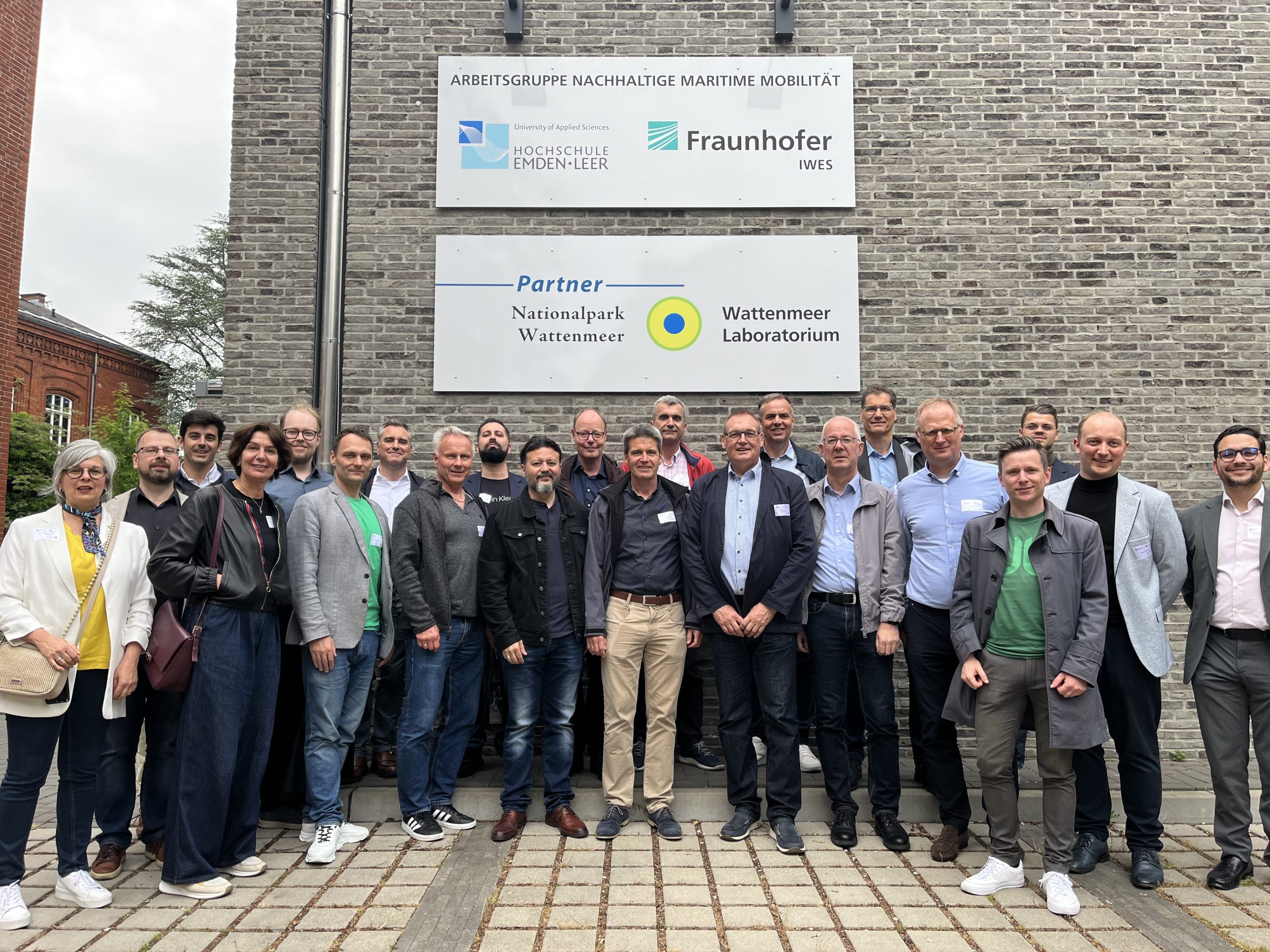
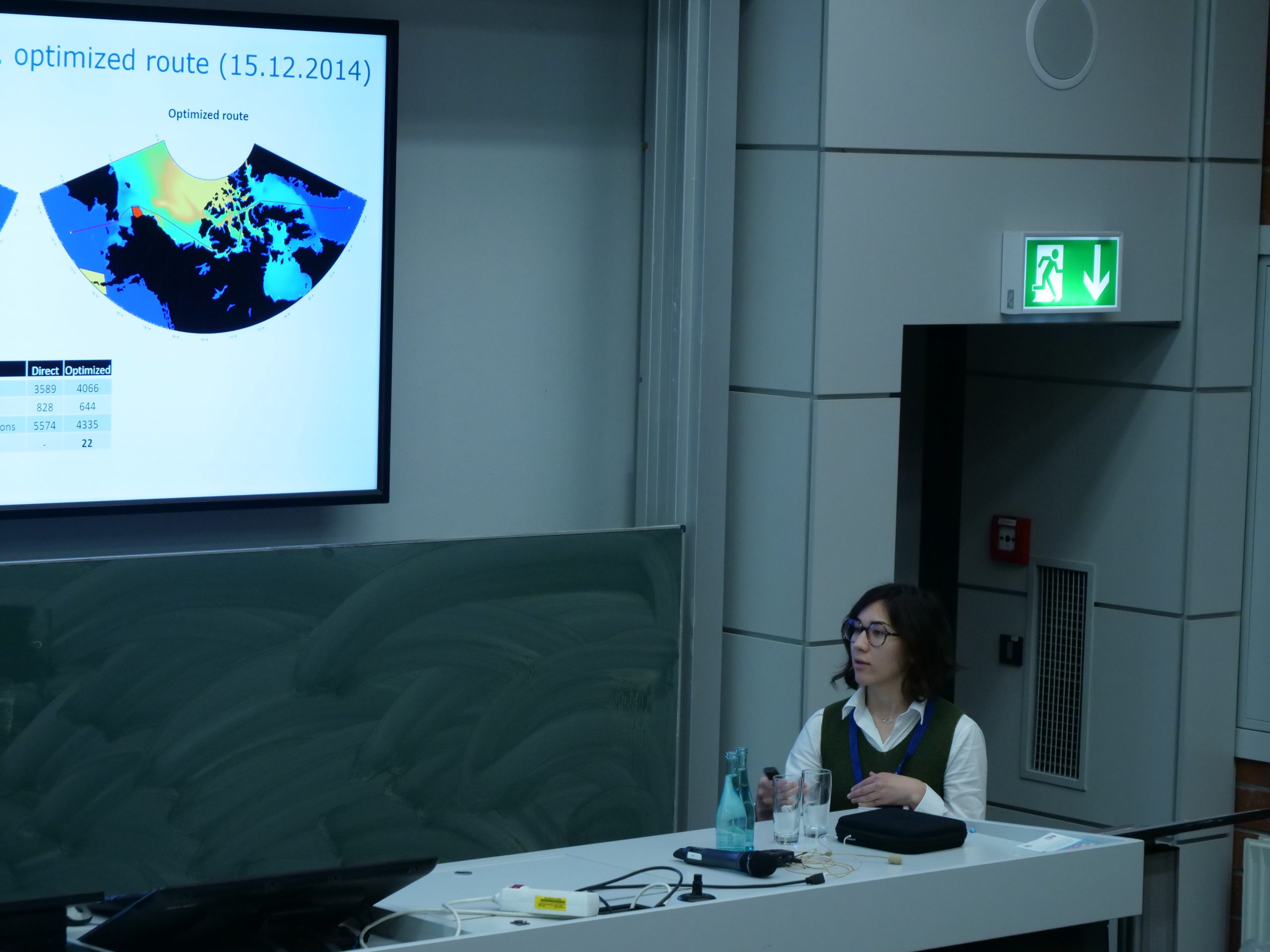
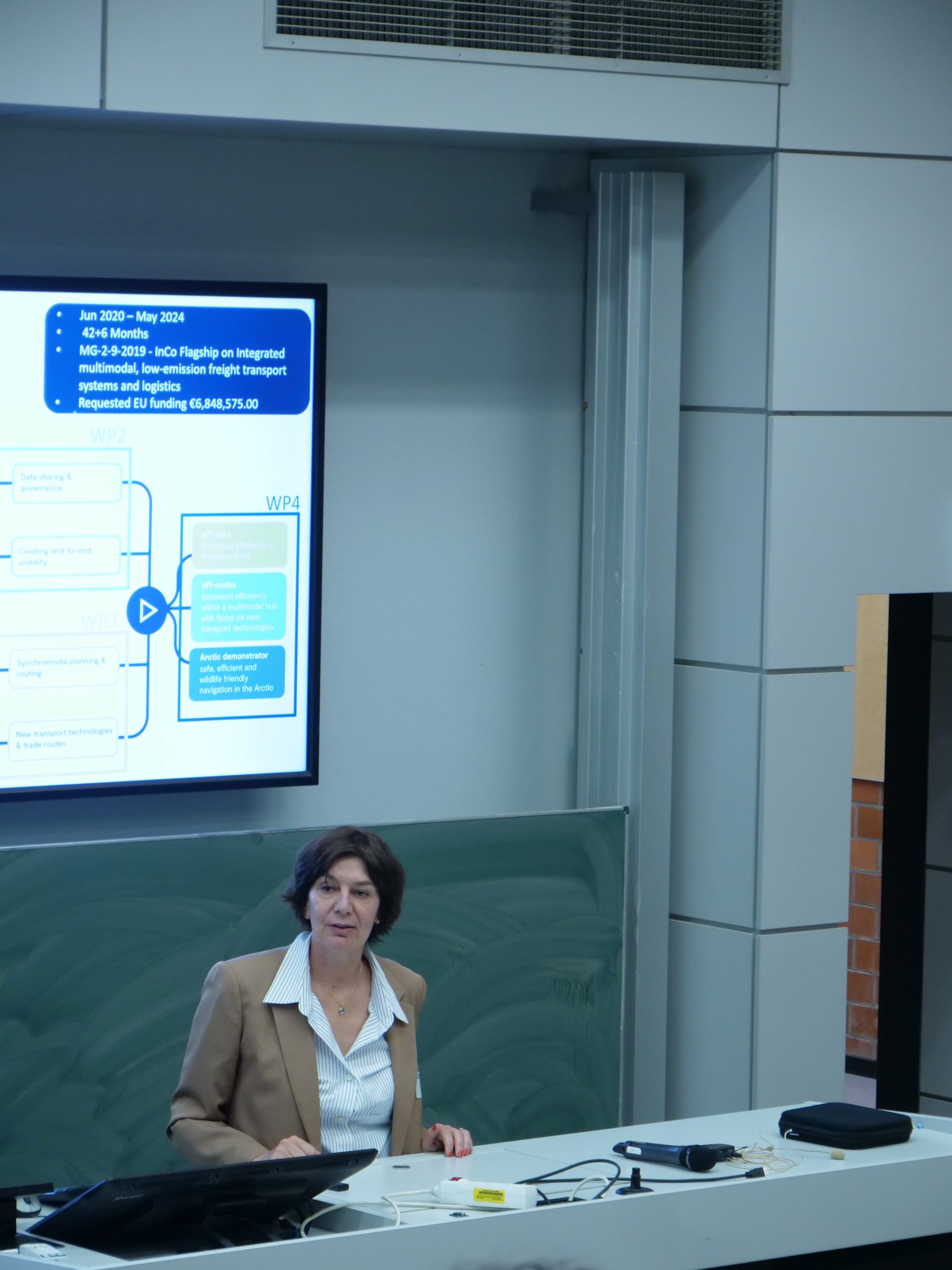
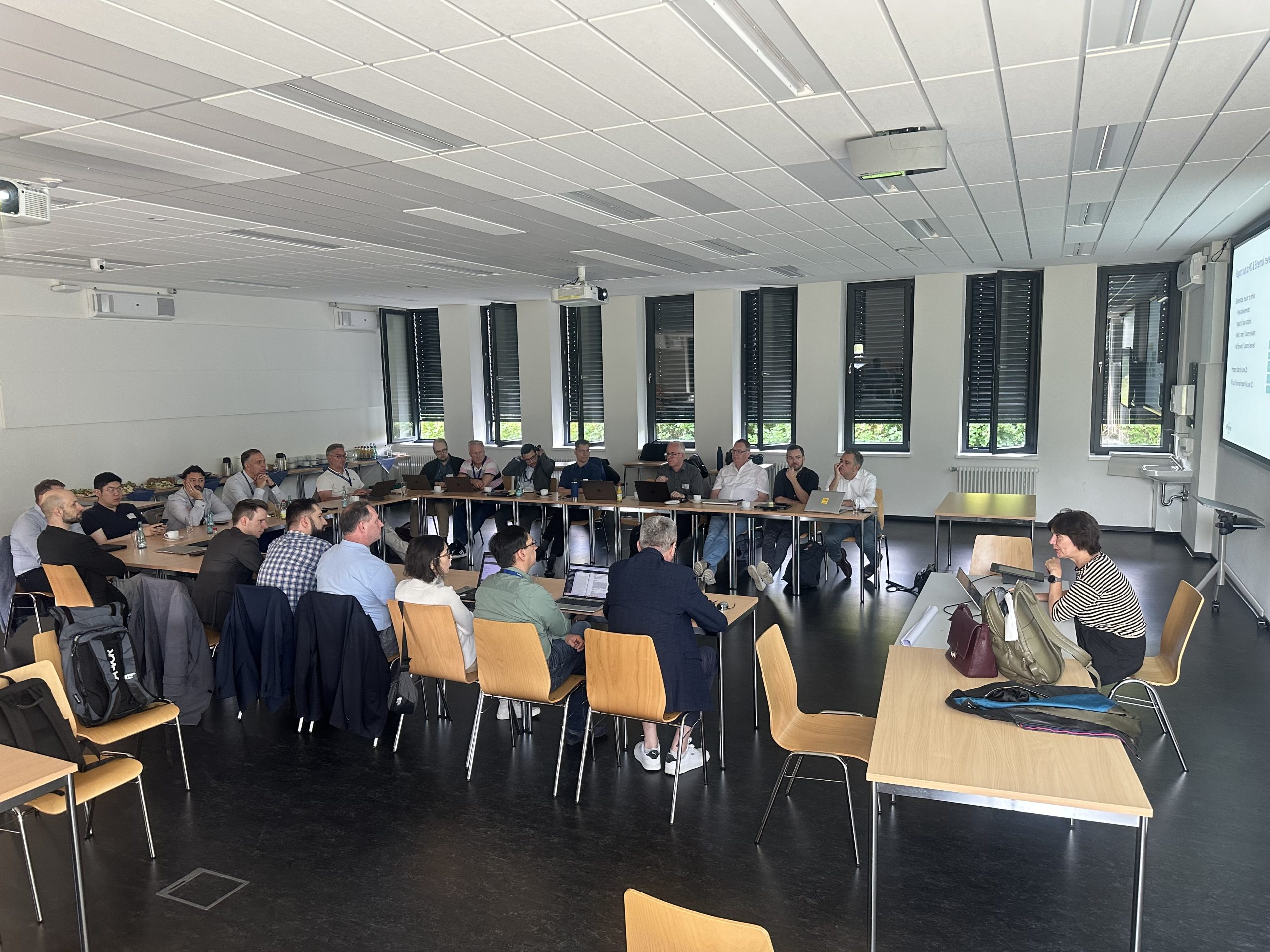
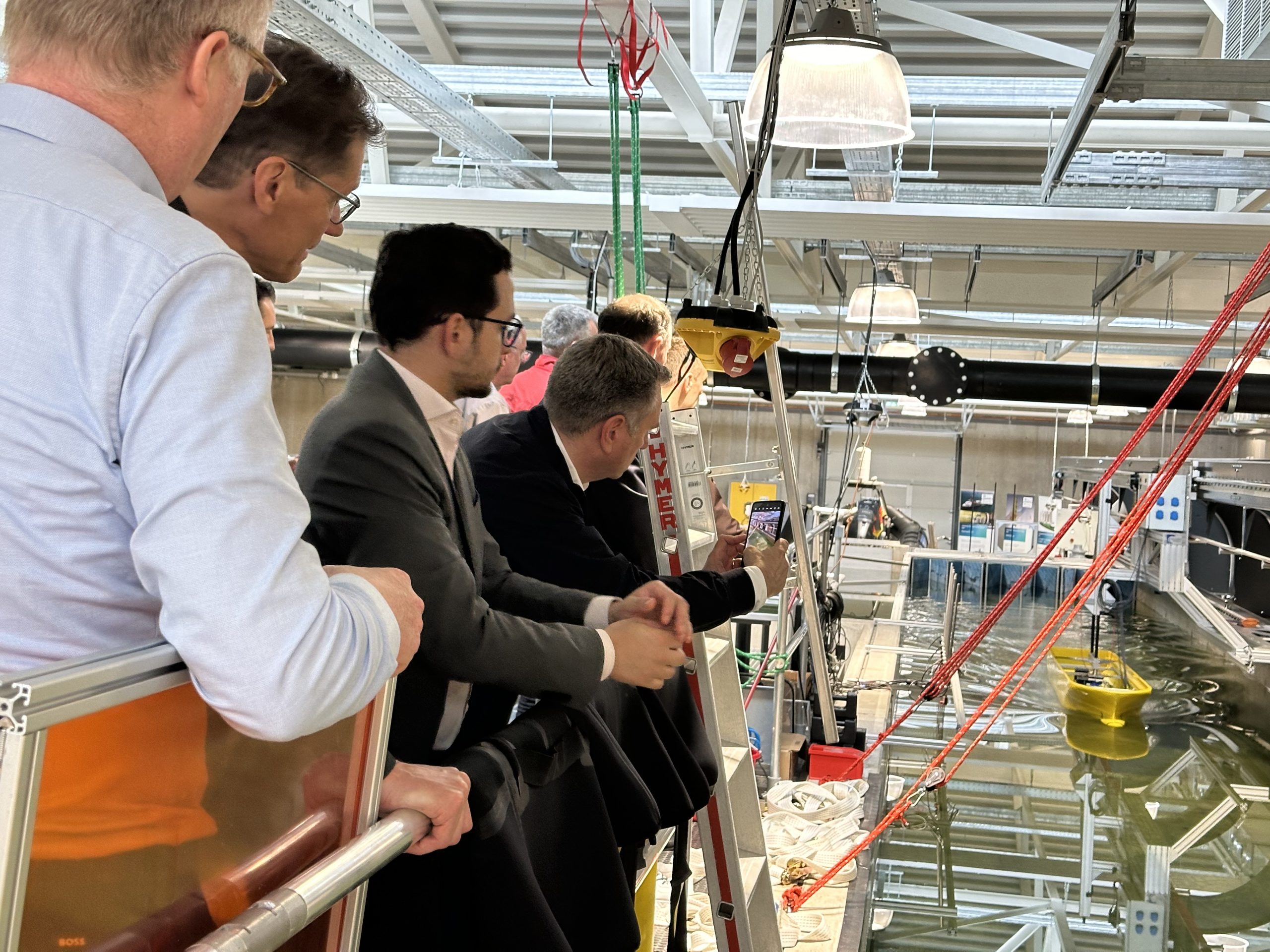
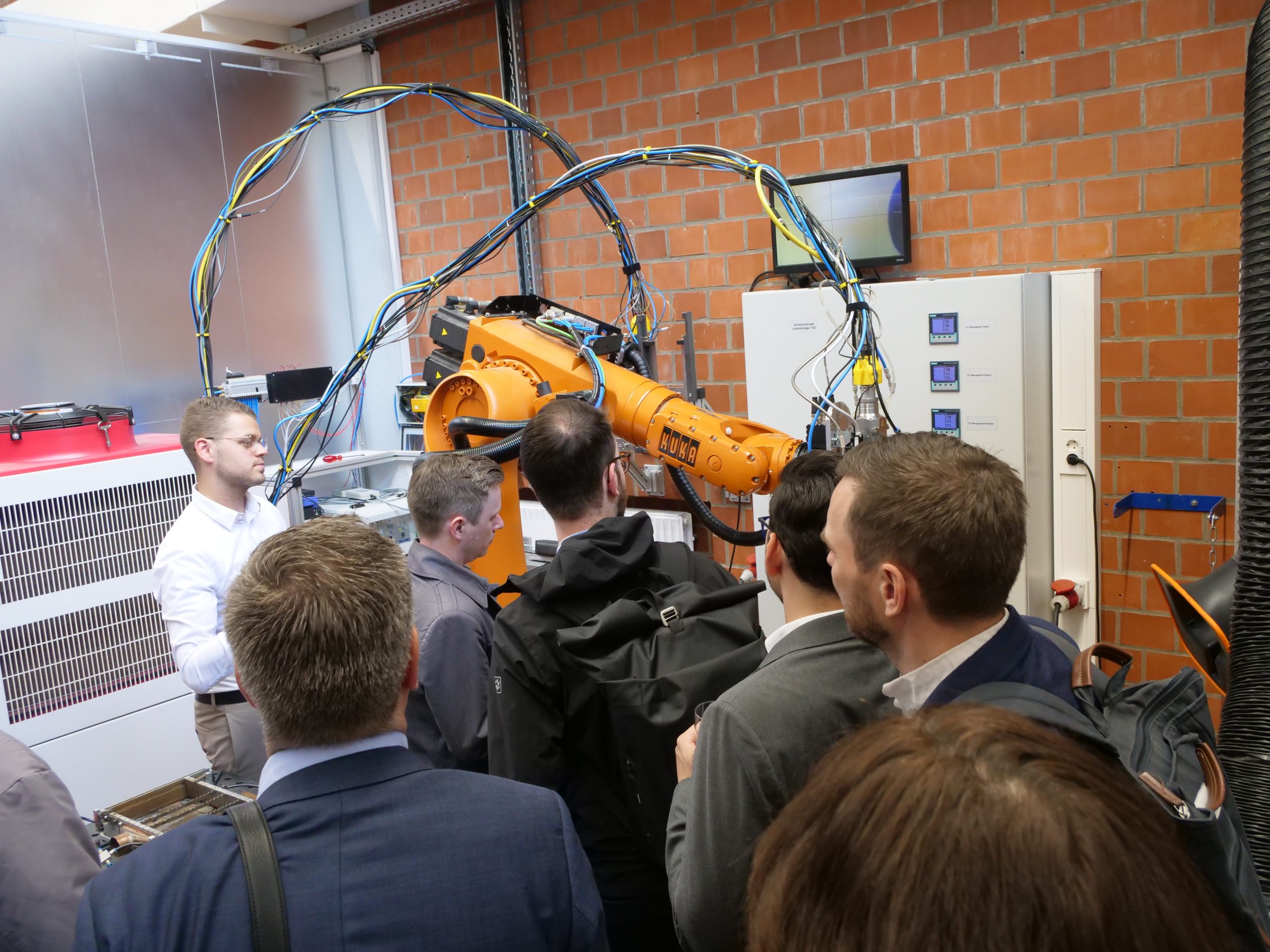
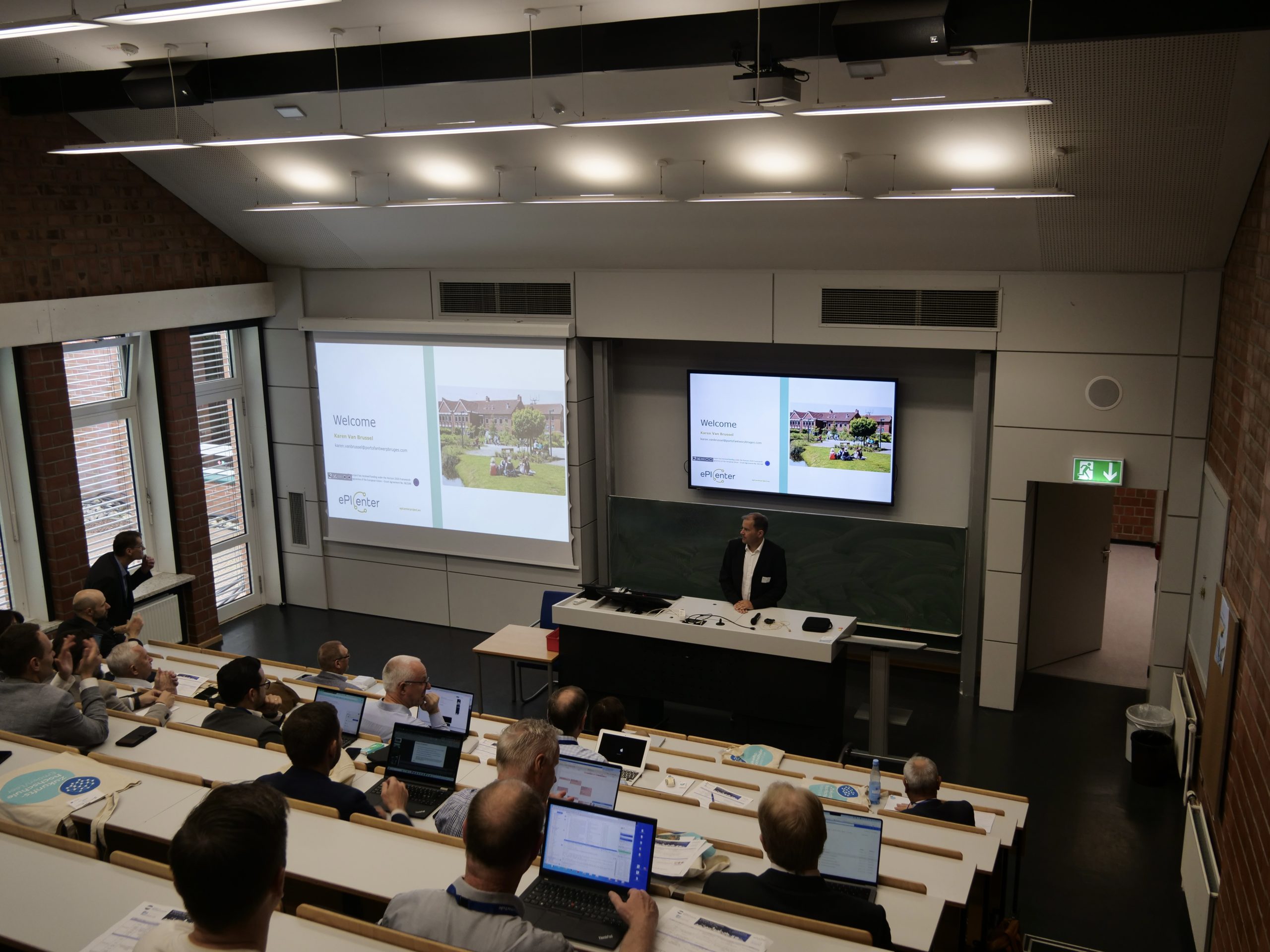
From 22nd of May to 24th of May, 2024 we hosted the final conference of our ePIcenter project with 36 EU partners from 17 nationalities here at the University of Applied Sciences Emden/Leer and Institute for Hyperloop Technology. On the first day, we visited the facilities of the Maritime Technology Center and toured the facilities on the campus in Leer. The second day was all about the demonstration results from the ePIcenter project! In the morning there were some great presentations from our international partners. The evening was dedicated to Hyperloop and the progress made with goTube at the Institute for Hyperloop Technology. To conclude the ePIcenter project, the third day was used for some management meetings to wrap up the ePIcenter project. We were happy to have been a part of an exiciting project with many interesting partners and concepts that have been researched and integrated into the Physical Internet approach. As the last excursion of the project, we were able to vist Volkswagen in Emden, where production has been converted to all-electric vehicles.
The high-resolution images can be found in the press kit section of the website.
Revolutionizing the mobility of the future with know-how from Europe
European Hyperloop Symposium in Brüssel
Emden Brüssel/Emden – The current status and goals of Europe-wide Hyperloop research as well as the project “EU HyTeC” were presented on Monday at the 2nd European Hyperloop Symposium at the Representation of the State of Lower Saxony to the European Union in Brussels. The event was hosted by the Institute for Hyperloop Technology (IHT) of the University of Applied Sciences Emden/Leer in cooperation with the Lower Saxony Ministry of Science and Culture (MWK).
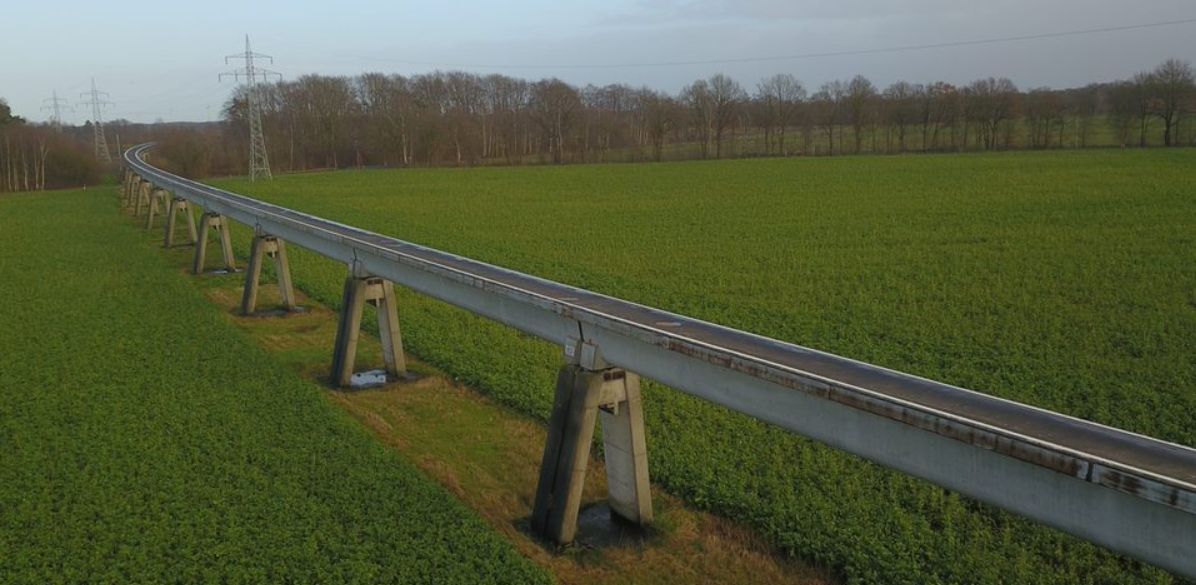
The scientific symposium, organized by the IHT with contributions from international researchers and developers, focused on the use of hyperloop technology for a climate-neutral Europe. The currently inoperative Transrapid test facility in Lathen is ideally suited as a center for the high-speed project on sustainable mobility. According to the project leads, the facility offers optimal conditions for a cost-effective and timely implementation of the project to advance realistic research and technology developments for the high-speed transport system Hyperloop.
In addition to Professors Walter Neu and Thomas Schüning from the Faculty of Technology at the University of Applied Sciences Emden/Leer, the Dutch partners of the start-up Hardt also had their say at the symposium, presenting the advantages of a transport infrastructure supplemented by the Hyperloop. Marcus Ebert, Deutsche Bahn, contributed interesting aspects from the perspective of an operator. Lukas Eschment, now a doctoral student at the IHT, and other members of the former competition teams from all over Europe, followed the discussion with rapt attention.
After the conclusion of the scientific conference, the IHT presented contributions to hyperloop research for representatives from the European Commission and the European Parliament at the invitation of the MWK of Lower Saxony. This event with 70 participants was opened by Jens Giesecke, Member of the European Parliament and Vice-Chairman of the Transport Committee. Carlo Borghini, Executive Director Europe’s Rail, emphasized in his speech “Hyperloop together with rail can be the solution to the energy and climate challenges of a climate neutral Europe”.
from left Walter Neu, Jens Gieseke, Carlo Borghini, Thomas Schüning
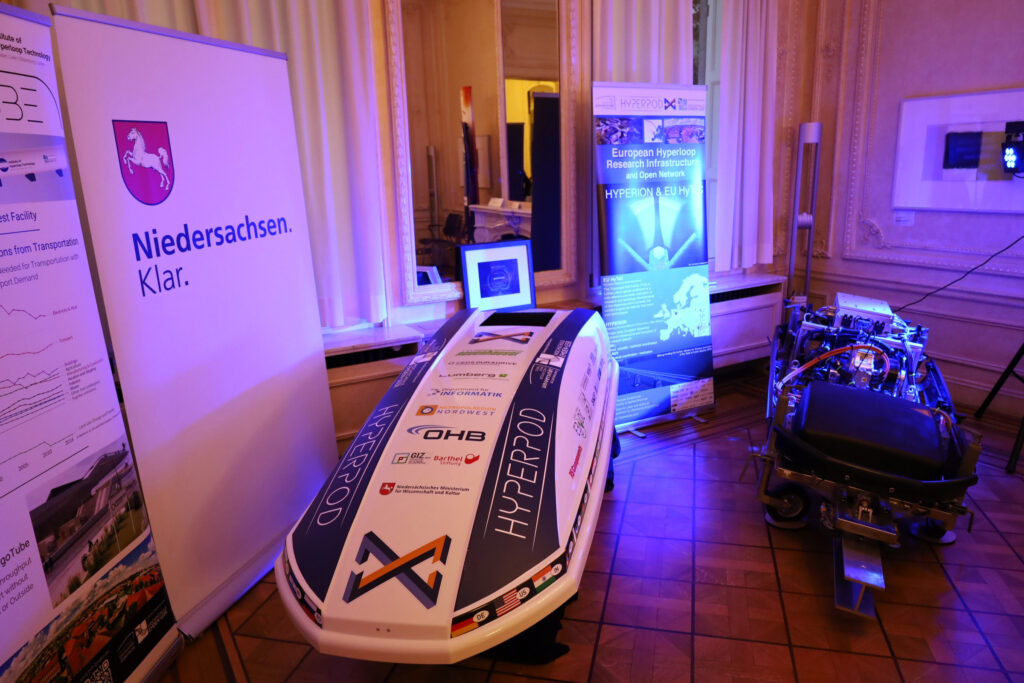
The exhibit of the prototype of the student teams HyperPodX of the University of Applied Sciences Emden/Leer and the University of Oldenburg brought the competition atmosphere from Los Angeles to Brussels. Keynote speeches highlighted the innovative approach of Hyperloop technology from a European and global perspective.
Source: Institute of Hyperloop Technology
Both events were supported by the state of Lower Saxony with the program Niedersachsen FIT, which supports the networking and cooperation of the developers of Hyperloop technologies on a European level. “We have successfully formulated new goals with our European partners and have been able to expand our network of supporters,” Prof. Walter Neu drew a positive conclusion from Brussels, in short “a complete success” according to Prof. Thomas Schüning.
Transportation is heavily challenged by global phenomena such as population growth, urbanization and climate change which led to contrasting needs of providing more frequent and faster connections while simultaneous reducing emissions. In the European Union especially, transport systems play a vital role as they enable the free movement of goods and services and therefore the generation of economic wealth across all member states. In short, the transport sector and its infrastructure form one of the backbones of the single European Economic Area. As a complex network, transport infrastructure connects cities and accommodates human activities coupling social, economic and environmental systems with urbanization and population growth. The transport network also contributes to the socio-economic development and increased quality of life by the creation of inter- and intra-city connections during urbanization by promoting the accessibility and connectivity between economic centers and areas of interest. In detail, transport infrastructure among cities leads to urban aggregation and diffusion, greatly boosting the regional and national economic development.
Technological progress in vehicles, in infrastructures and in ICT solutions have facilitated the globalization of the world economy, reduced travel times and provided more comfort at a lower cost. However, it has become apparent that contemporary transport systems also have severe drawbacks related to increased air pollution, noise nuisance and traffic congestion that can deteriorate the quality of life that they are meant to support instead. One possible way to address these concerns in the long term is to develop new and advanced modes of transport that satisfy environmental compatibility through minimal carbon footprints on the one hand, while on the other hand accommodate possible high-capacity and high-speed throughput to support society’s future needs.
Regarding this urge for change, there is an increased dynamic of innovations in the transport sector, both from the technological and business model perspective, with the potential to disrupt the industry as it is nowadays. Among the new transport modes proposed, the Hyperloop is an emerging concept for mid/long-distance travels as a carbon-free alternative to airplanes and as a complement to the railway network both in preserving investments already completed and planned while unlocking the full economic and social development of the areas not yet served by premium transport modes. The Hyperloop is a guided mode of transport that operates magnetically levitating vehicles running at up to sonic speed within a low-pressure tube. Such a concept is set to rely exclusively on renewable sources like solar energy also leveraging the extension of the linear infrastructure as a whole.
Source: Institute of Hyperloop Technology
Due to the unique concept of Hyperloop the non-recuperative energy losses due to air friction can be minimized by running the system in a low-pressure environment without restriction in high speed capacity. Especially at high speed transport, air resistance and friction are the biggest energy contributions which are normally unavoidably lost due to thermodynamics and thermal conversion. Minimizing substantially the high impact energy losses due to air friction is the key parameter for sustainability. Keeping these losses which scale with the velocity cubed and cannot be recuperated by any means to a minimum is the core objective of hyperloop.
However, noise, weather-exposure, safety, total energy consumption and the aforementioned direct emissions of greenhouse gases connected with freight transportation will be substantially reduced through the use of Hyperloop. Emerging solutions need to be carefully analysed and evaluated so as to understand what their contribution to a sustainable transport system can be.
HSEL’s (University of Applied Sciences Emden/Leer – HSEL) profile as a university of applied science, research center and in particular its leading role in the HyperPodX project, demonstrates that it is very well placed to bring Hyperloop expertise to ePIcenter with a broad perspective to integrate this exciting technology into modern logistics applications and “Industry 4.0” operations. HSEL’s main tasks are Artificial Intelligence & ePIGEN Optimisation, design and construction of a demonstrator and Freight Network Configuration Impact Comparator as well as important input to vision, standards, lessons learned and exploitation.
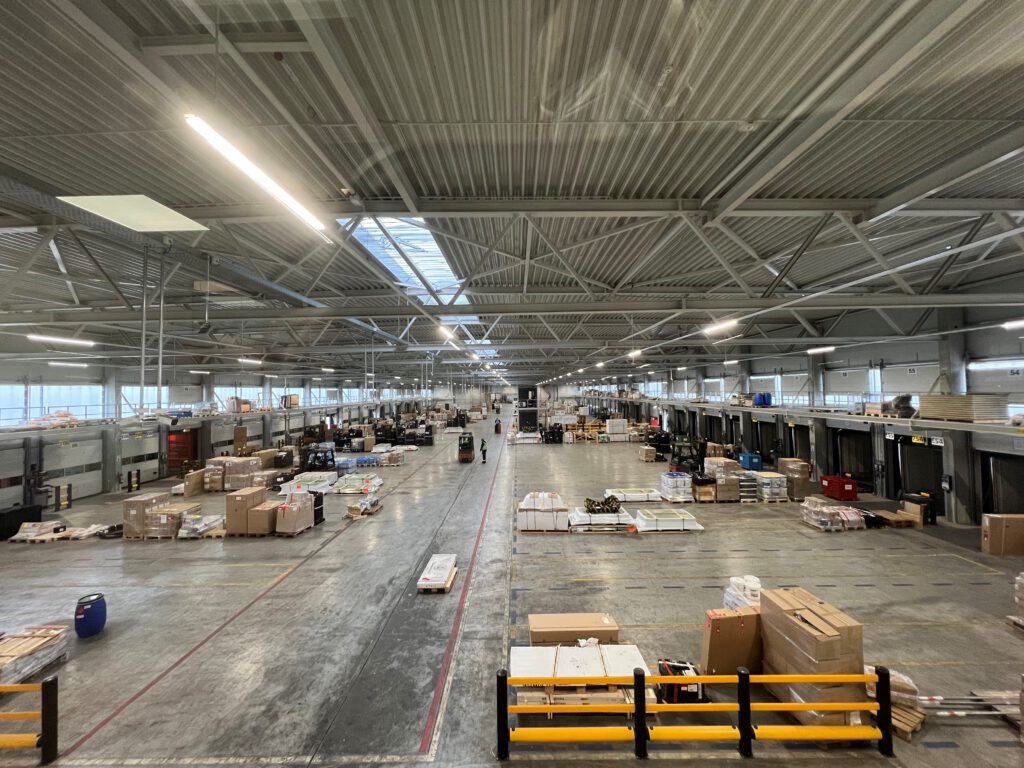
The Hyperloop & New Transport Technologies Demonstrator aims at understanding how new concepts in transportation solutions in combination with new strategies to organize freight flows in major ports have an impact on global freight transport contributing to major reduction of greenhouse gas emissions. It will contemplate the impact of future innovative transport solutions such as freight hyperloops and new unmanned electric vehicles. To do so it will consider the complex model of Europe’s largest manufacturing company Volkswagen, its large operation and its major freight warehouses around Wolfsburg. Regional logistic concepts for hubs, requirements from the hub operator perspective and requirements from large manufacturer point of view will be taken into account. ePIcenter will analyse different scenarios comparing the transport/value chain of today with different options in the future.
The University of Applied Sciences Emden/Leer:
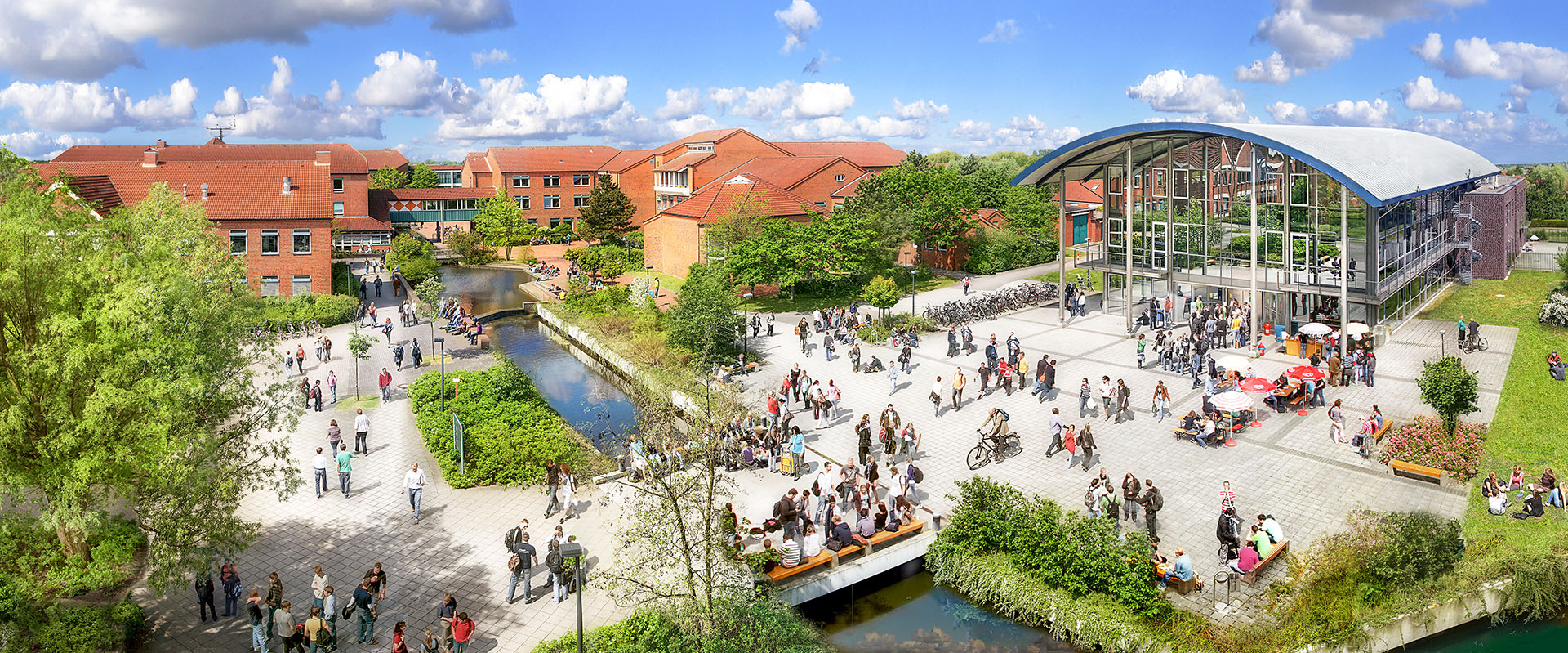
The University of Applied Sciences Emden/Leer was newly founded in 2009 and is located in Emden, Germany. With 25 bachelors´s degree programs and 12 master´s degree programs the university is one of the most important teaching facilities in the region of Northern Germany. Four study faculties are represented here: Business Studies, Technology, Maritime Sciences and Social Work and Health.
The university is characterized especially by its regional reference and by its internationality. The location establishes a regional connection to the Ems region and is ideal for maintaining international contacts due to its close proximity to the coast and the border. In addition, there are international contacts due to joint study programs with other partners.
In all technology and research issues, the university acts as a contact for companies from industry and trade in the region. Contacts to specialists and laboratories are arranged for the companies located in the region and contacts to competent research partners are established.
Through the research work and further education opportunities at the university, impulses are given to the regional economy for new orientations and start-ups.
The university takes on responsibility for sustainable development within our society. We want our students to be able to meet future challenges in accordance with the principles of sustainability. Our research is oriented towards helping to solve global problems in technology, economy and society.
Source: Institute of Hyperloop Technology and Edda Schneider
Institute of Hyperloop Technology:
The Institute of Hyperloop Technology (IHT), founded in 2021, focuses on Hyperloop development and applications both in fundamental and engineering sciences. The institute aims to establish an international consortium to foster a Large-Scale Hyperloop Research and Technology Facility in Europe, with testing occurring at operational conditions. This joint effort of the private sector and academia in an open research network will accelerate the development of a standardized European Hyperloop ecosystem. In addition, the IHT is now focusing its activities on academic research to create a European Hyperloop solution with the help of academia and industry.
Apart from the ePIcenter project the Institute is involved in other international research projects to develop a sustainable transportation solution for the future. These include e.g. the Hyperloop Development Program in the Netherlands and EuHyTec, a funding opportunity from the State of Lower Saxony to develop a Large-Scale Test Infrastructure for Hyperloop Technology in Lathen.
Source: tbnlr-gmbh; Nobel, T.Source: tbnlr-gmbh; Nobel, T.
The high-resolution images can be found in the press kit section of the website.
Gemeinsam die Mobilität in Europa voranbringen – Konferenzreihe zu Hyperloop-Technologien gestartet
Emden – Mit mehr als 200 Teilnehmern aus der ganzen Welt startete am Dienstag die Konferenzreihe „European Hyperloop Technology“ mit ihrer Auftaktveranstaltung. Die Initiatoren Prof. Dr. Walter Neu und Prof. Dr.-Ing. Thomas Schüning arbeiten in Kooperation der Hochschule Emden/Leer und der Universität Oldenburg bereits seit mehreren Jahren daran, Hyperloop als klimaneutrale und innovative Mobilitätsalternative voranzubringen.
Der niedersächsische Minister für Wissenschaft und Kultur, Björn Thümler, eröffnete die internationale Konferenz und betonte dabei, dass ein klimaneutrales Europa auch eine klimaneutrale Mobilität voraussetze. Der Aufbau einer Hyperloop-Infrastruktur könne entscheidend zu diesem Ziel beitragen. Die Europäische Kommission hat mit sich dem Green Deal das Ziel gesetzt, Europa bis 2050 zum ersten klimaneutralen Kontinent werden zu lassen.
Auch appellierte Thümler an die Zusammenarbeit, denn nur so könne schnell Fortschritt ermöglicht werden. „Dieser Wettbewerb ist im besten Sinne europäisch, denn nur gemeinsam mit unseren Partnern in Europa werden wir die globale Herausforderung meistern, innovative Lösungen für die Mobilität der Zukunft zu finden.“ Diese Kooperation leben beide beteiligten Hochschulen bereits seit mehr als 20 Jahren im internationalen Modellstudiengang Engineering Physics, so der Vizepräsident der Universität Prof. Dr. Martin Fränzle.
Welche Vorteile das Transportmittel Hyperloop mit sich bringt, wurde durch die Vorträge der teilnehmenden Start-ups wie Hardt Hyperloop aus den Niederlanden deutlich: Mit-Gründer und Vorstandsmitglied Mars Geuze nannte dabei unter anderem einen schnelleren Güter- und Personenverkehr, geringe CO2-Emissionen und das Vermeiden von Lärmbelästigung. „Hyperloop zählt zu den wichtigen Zukunftstechnologien im Sinne der nachhaltigen Mobilität“, so Prof. Dr. Gerhard Kreutz, Präsident der Hochschule Emden/Leer. Dies werde unter anderem durch die internationale Beteiligung am Projekt deutlich.
Um die Technik alltagstauglich testen zu können und um neue Forschungsansätze zu entwickeln, soll die 32 Kilometer lange Strecke in Lathen in eine Hyperloop-Teststrecke umgebaut werden. Die Projektbeteiligten sehen dies als großartige Chance für einen großen Sprung bezüglich der weiteren Entwicklung der Technologie. „Die Strecke bietet eine perfekte Grundlage, da sie nur weiter ausgebaut werden muss und nicht neu entstehen muss“, so Prof. Dr. Walter Neu, der das Projekt gemeinsam mit Prof. Dr. Thomas Schüning vom Fachbereich Technik der Hochschule leitet. Weltweit gebe es keine Testtrecke, die auch nur annähernd so groß wie die ehemalige Transrapidstrecke sei, die seit rund zehn Jahren stillgelegt ist. Die Teilnehmenden beteiligten sich rege in dem Format der Online-Konferenz und stellten zahlreiche Fragen an die jeweiligen Vortragenden. Gemeinsames Ziel ist es nun, in einem Konsortium von Vertretern aus Wissenschaft, Politik und Industrie sowie mit weiteren wichtigen Entscheidungsträgern Fördergelder zur weiteren Forschung zu beantragen.